

Can sleeping in a chair cause leg swelling?
Have you ever fallen asleep in your favorite armchair while watching television, only to wake up with heavy, tight, and puffy legs? If you find yourself asking the question, “Can sleeping in a chair cause leg swelling?” The short answer is absolutely yes.
While taking a quick afternoon nap in a cozy armchair seems harmless, making a regular habit of chair sleeping can lead to uncomfortable and sometimes concerning fluid buildup.
Let’s dive into the science behind leg swelling from sleeping in a chair, explore the underlying mechanisms of fluid retention, and discover practical, actionable ways to protect your circulation and keep your legs feeling light and healthy.
The Science Behind Posture and Swelling
To fully understand what are causes of edema in legs (the medical term for swelling), we first have to look at how the human body interacts with gravity.
When you sit upright for several hours, your cardiovascular system has to work incredibly hard to pump blood from your feet back up to your chest. Your veins rely on the movement of your calf muscles—often referred to as the “second heart”—to push this blood upward. When you are asleep in a chair, your legs are entirely motionless.
This constant downward pull is one of the primary gravity-dependent edema causes. If you have ever wondered why feet swell when sleeping upright, it is simply because the inactive calf muscles allow blood and fluid to pool in the lower extremities. Over several hours, the pressure inside the veins builds up, forcing water and proteins out of the blood vessels and into the surrounding tissues.
Furthermore, being scrunched up in a seated position heavily dictates the impact of posture on lymphatic drainage. The lymphatic system, which helps clear toxins and excess fluids from the body, gets physically restricted at the hips and knees when you sit for extended periods, trapping fluid in your lower half.
Identifying Symptoms and Risks
Leg edema causes can range from simple inactivity to underlying, serious health conditions. It is important to pay attention to what your body is telling you.
Watch for the Warning Signs
The symptoms of poor blood flow in legs generally include a feeling of heaviness, a tight or shiny sensation in the skin, tingling, and visible puffiness around the ankles and calves. Over time, persistent fluid buildup can lead to edema lower leg swelling, which can make wearing shoes uncomfortable and cause a dull, aching pain.
Another common factor is venous insufficiency from prolonged sitting. When the tiny, one-way valves inside your leg veins become stretched or weakened, they struggle to keep blood moving in the right direction. Educating yourself on chronic venous disease symptoms and prevention is essential if you spend a large portion of your day—or night—in a chair.
Left Leg Edema vs. General Swelling
While bilateral swelling (in both legs) is standard for chair sleepers, asymmetrical swelling is a red flag. For instance, isolated left leg edema could indicate a localized issue such as pelvic vein compression (like May-Thurner syndrome) or a blood clot. If one leg swells suddenly, becomes red, or feels warm to the touch, seek medical attention immediately.
The Hidden Danger of Blood Clots
One of the most critical hazards to be aware of is the risk of deep vein thrombosis in recliners. Deep vein thrombosis (DVT) is a dangerous blood clot that forms in the deep veins of the body. Sleeping in a seated, immobilized position for hours dramatically increases the chance of these clots forming, which can be life-threatening if they break loose and travel to the lungs.
Sleeping in a Recliner vs Bed for Circulation
When comparing sleeping in a recliner vs bed for circulation, the traditional bed almost always wins.
In a bed, your body is fully horizontal. This eliminates the intense gravitational pull on your legs, making it incredibly easy for blood and lymphatic fluid to flow back toward your vital organs. Conversely, a recliner—even when pushed far back—often keeps your body bent at the waist and knees, kinking the “hoses” (blood vessels) that carry fluid out of your lower extremities.
Understanding nocturnal leg swelling causes and remedies often comes down to this simple postural difference. If you suffer from conditions like sleep apnea or severe acid reflux that make flat sleeping uncomfortable, it is crucial to find a middle ground that doesn’t compromise your leg health.
Safe Sleeping and Elderly Care
Older adults naturally experience changes in vascular elasticity, making them more susceptible to fluid pooling. Finding safe sleep positions for elderly with edema is highly important for their overall comfort and mobility.
If a senior must sleep elevated for respiratory or digestive reasons, an adjustable bed is far superior to an armchair. Adjustable beds allow the torso to be raised while keeping the legs relatively straight and level, removing the sharp bends at the hips and knees that restrict circulation.
Practical Solutions: How to Prevent and Reduce Leg Swelling
If you must sit for long periods, or if you are looking for how to stop ankles from swelling while sitting, there are several highly effective strategies you can implement right away.
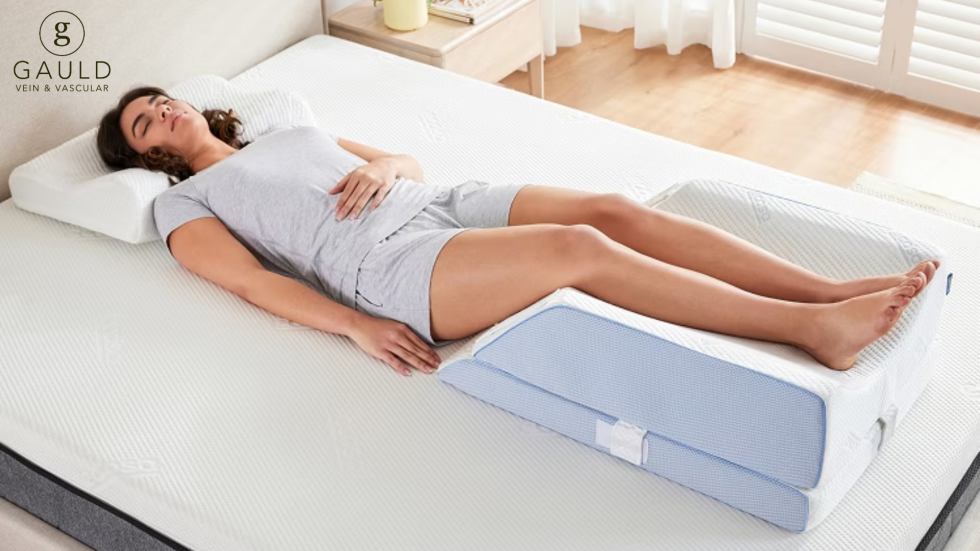
- Elevate your feet properly: You can easily reverse the effects of gravity. The benefits of elevating legs above heart level are well-documented. Lying down with your legs propped up on a few pillows for just 20 to 30 minutes a day can rapidly drain pooled fluid and relieve pressure.
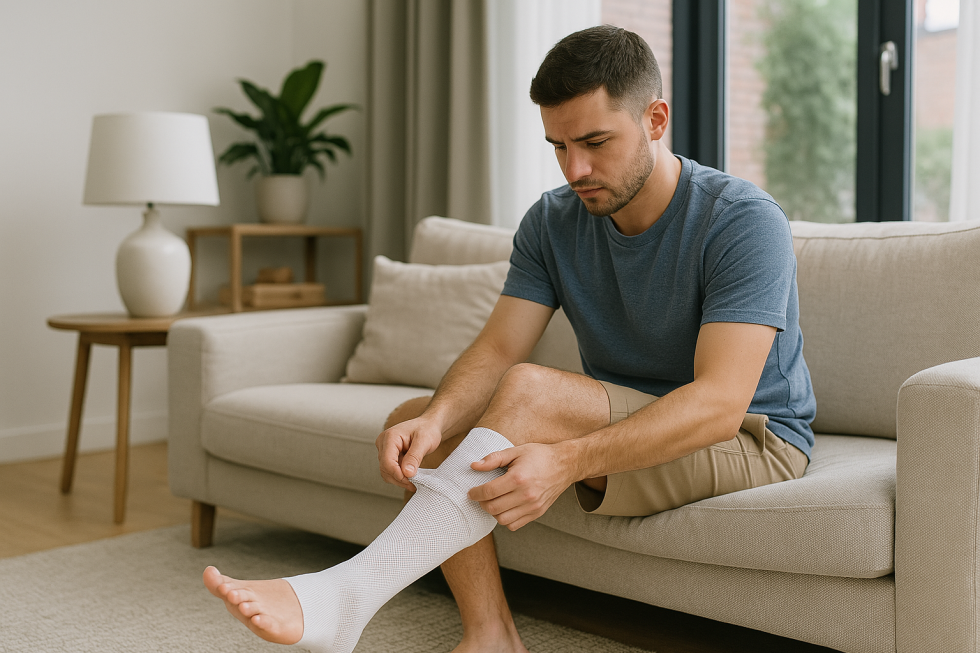
- Wear supportive garments: Utilizing compression stockings for lower limb swelling is one of the most effective preventative measures. These specialized socks apply graduated pressure—tighter at the ankle and looser further up—to help your veins pump blood efficiently.
- Keep moving: You don’t have to stand up to get your blood flowing. There are simple exercises to improve leg circulation while seated. Try doing ankle circles, pointing and flexing your toes, and extending your knees straight out in front of you. Doing this for just two minutes every hour activates your calf muscle pump.
- Tweak your diet: If you are researching how to reduce peripheral edema naturally, start in the kitchen. Reduce your salt intake, as sodium causes the body to retain water. Additionally, stay thoroughly hydrated and incorporate potassium-rich foods (like bananas, avocados, and sweet potatoes) to help balance your body’s fluid levels.
The Bottom Line
So, can sleeping in a chair cause leg swelling? Without a doubt. While an occasional chair nap won’t cause long-term damage, habitually sleeping upright forces your circulatory and lymphatic systems to fight a losing battle against gravity.
By understanding the mechanics of leg edema, making mindful choices about your sleeping environment, and utilizing simple habits like leg elevation and foot exercises, you can effectively manage fluid retention. Prioritize sleeping horizontally whenever possible, and keep your legs active and elevated to ensure they stay healthy, comfortable, and swelling-free.
The Importance of a Comprehensive Approach
Healthy veins are part of overall lower-extremity wellness. In some cases, foot mechanics and musculoskeletal conditions can impact circulation and mobility.
At Gauld Vein & Vascular, we work closely with Gauld Foot & Ankle, and both operate under Gauld Health. This integrated, multispecialty approach allows us to coordinate vascular and podiatric care seamlessly — ensuring complete, patient-centered treatment.
Call us today (404) 435-0718 or request an appointment online

0 Comments